Invisible variables: what we don’t yet understand about psychedelic therapy
Group-level statistics suggest that psychedelics help. But behind every score lies a whole galaxy of variables that barely register in research abstracts. An expanded version of my talk at the Nauka Psychodeliczna 2026 (Psychedelic Science) conference.

On 13–14 June, I spoke at the Nauka Psychodeliczna 2026 (Psychedelic Science) conference at the University of Warsaw, where I gave a talk entitled “Invisible Variables”. This text is an expanded version of that talk: for those who attended and want to revisit the argument at their own pace, and for those who were not there. I have embedded the slides below, but everything that matters is in the text.
I am not a sceptic watching from the sidelines. I am a psychologist and psychotherapist working at the intersection of two worlds that rarely speak to each other: clinical psychology and the treatment of personality disorders on the one hand, and clinical research on psychedelics on the other. I have spent many hours preparing patients for sessions, accompanying them during the sessions themselves and helping them integrate their experiences afterwards. I am also involved in research and supervision.
The title of my talk is “Invisible Variables”, although “unnoticed” might be more honest. These variables are not inaccessible. They can be seen. We simply rarely look at them. And that is my question: not “Do psychedelics work?”, but what do we still not understand, and what happens beneath the surface of the numbers we use to discuss them?
Let’s assume they work
For the purposes of this talk, let us make one assumption. Let’s assume they work.
There are grounds for doing so. A classical psychedelic now has phase 3 data. In the COMP005 trial, a 25 mg dose of psilocybin produced an approximately 3.6-point greater reduction in MADRS scores than placebo at week 6 (p < .001); in COMP006, the difference relative to the 1 mg dose was 3.8 points. Earlier, a phase 2b trial (Goodwin et al., 2022) found a difference of approximately 6.6 MADRS points at week 3 and remission in roughly one third of patients with treatment-resistant depression. Evidence of efficacy is accumulating, and there are strong indications that these treatments will enter widespread use.
These are not the only data. An earlier trial comparing psilocybin with escitalopram found no significant difference on the primary outcome, although psilocybin performed more favourably on some secondary measures (Carhart-Harris et al., 2021). A six-month follow-up of the same trial suggests that the effect persists in some people (Erritzoe et al., 2024). The evidence base is heterogeneous.
So, if we assume that these treatments work and want to introduce them into clinical practice on a wider scale, we must ask whether we, as mental health professionals, are prepared. What do we still not know, but ought to know, before they become widely available? This work will not remain in the hands of a small group of experienced practitioners who have spent years in the field or worked on clinical trials over the past decade. The field will open up to a much wider group of professionals, because many psychiatrists, psychologists and psychotherapists will be needed to meet the anticipated demand. Treatments studied so far under tightly controlled conditions will be delivered in conditions that are far from ideal.
Statistics is a tool, not an oracle
First, something that sounds obvious but is repeatedly forgotten. Statistics is a tool, not an oracle. Using research evidence does not change reality itself. It does not eliminate bias; it merely changes its form. No study is perfect. Psychedelic research faces methodological problems at many levels, from what we actually measure to functional unblinding. Participants usually know what they have received—after taking a psychedelic, it is difficult not to guess—and this probably inflates the observed effects (Rosenbaum, 2024).
In a conventional double-blind trial, neither the patient nor the researcher knows who has received the drug and who has received placebo. Blinding helps us distinguish the effect of the substance from the effect of the expectation that “this will help me”. With psilocybin, this mechanism often fails in practice. The experience is so distinctive that participants can usually tell which group they are in. This raises a serious question: how much of what we observe is a pharmacological effect, and how much is the effect of believing that one has received something groundbreaking? Most importantly for me, it means that expectation is one of the active variables in treatment, not a nuisance that can simply be “subtracted”. Placebo and nocebo effects are not noise here; they are signal—evidence of how much the patient’s expectations and prior beliefs matter. I will return to this, because it is one of our invisible variables.
I am not going to give a lecture on methodology, however. I want to focus on one issue—the one most important in the consulting room: what do we actually measure when we speak of “improvement”? What matters is the most effective and least burdensome treatment, one that produces lasting change, not merely one that looks good in a table.
What do we actually mean by “improvement”?
If we say that “depression decreased by so many points”, we ought to know what those points represent. Depression studies commonly use two clinician-rated scales. The Montgomery–Åsberg Depression Rating Scale (MADRS) has ten items, while the 17-item Hamilton Depression Rating Scale (HAM-D or HAMD-17) has seventeen. A trained clinician rates symptom severity on the basis of an interview and clinical observation; these are not simply self-report questionnaires completed by the patient. The ten MADRS items cover apparent sadness, reported sadness, inner tension, reduced sleep, reduced appetite, concentration difficulties, lassitude, inability to feel, pessimistic thoughts and suicidal thoughts.
How to read these numbers
After equalising unblinding, the psychedelic edge over placebo drops from 7.3 to 0.3 pts
below the threshold a patient can even feel
Where patients are · full HAM-D scale (0–52 pts)
Both groups, drug and placebo, improve by a dozen or more points. The whole debate is about the difference in that improvement, shown below.
How much treatment beats placebo · difference in HAM-D points
E.g. 3 points is roughly the difference between "can't get out of bed" and "can get up".
The figures in this chart come from a meta-analysis published in JAMA Psychiatry, which I examine in a separate post. They are expressed in HAM-D points, whereas the psilocybin results above are reported in MADRS points. These are two different scales, and scores on one cannot be converted directly into scores on the other.
Notice what “measuring the severity of depression” actually entails. We add up ratings from a narrow list of symptoms—largely mood, tension, sleep and appetite. There is no item addressing meaning, relationships, identity or the durability of change. And what does “minus 3.6 points” mean? On the MADRS, which ranges from zero to sixty, it represents a real but narrow shift, confined to those particular items. This is the window through which we look. The rest of the person remains outside its frame.
One more concept helps to organise the entire discussion of “efficacy”: the minimal clinically important difference (MCID). This is the threshold below which a difference may exist in the data but is unlikely to be noticeable in the patient’s life. For the HAM-D, a threshold of 3 points has been used by NICE. Even that may be lenient. A 3-point difference is not detected by clinicians making a global rating of improvement using the CGI-I, and approximately 7 points are required before the difference corresponds even to “minimal improvement” (Moncrieff & Kirsch, 2015). When we compare treatments point by point, we are often discussing differences that fall below the threshold of perceptible change.
From the average to three stories
Let us move from the level of the average to the level of the person.
We have a group mean—say, a reduction of 3.6 points.
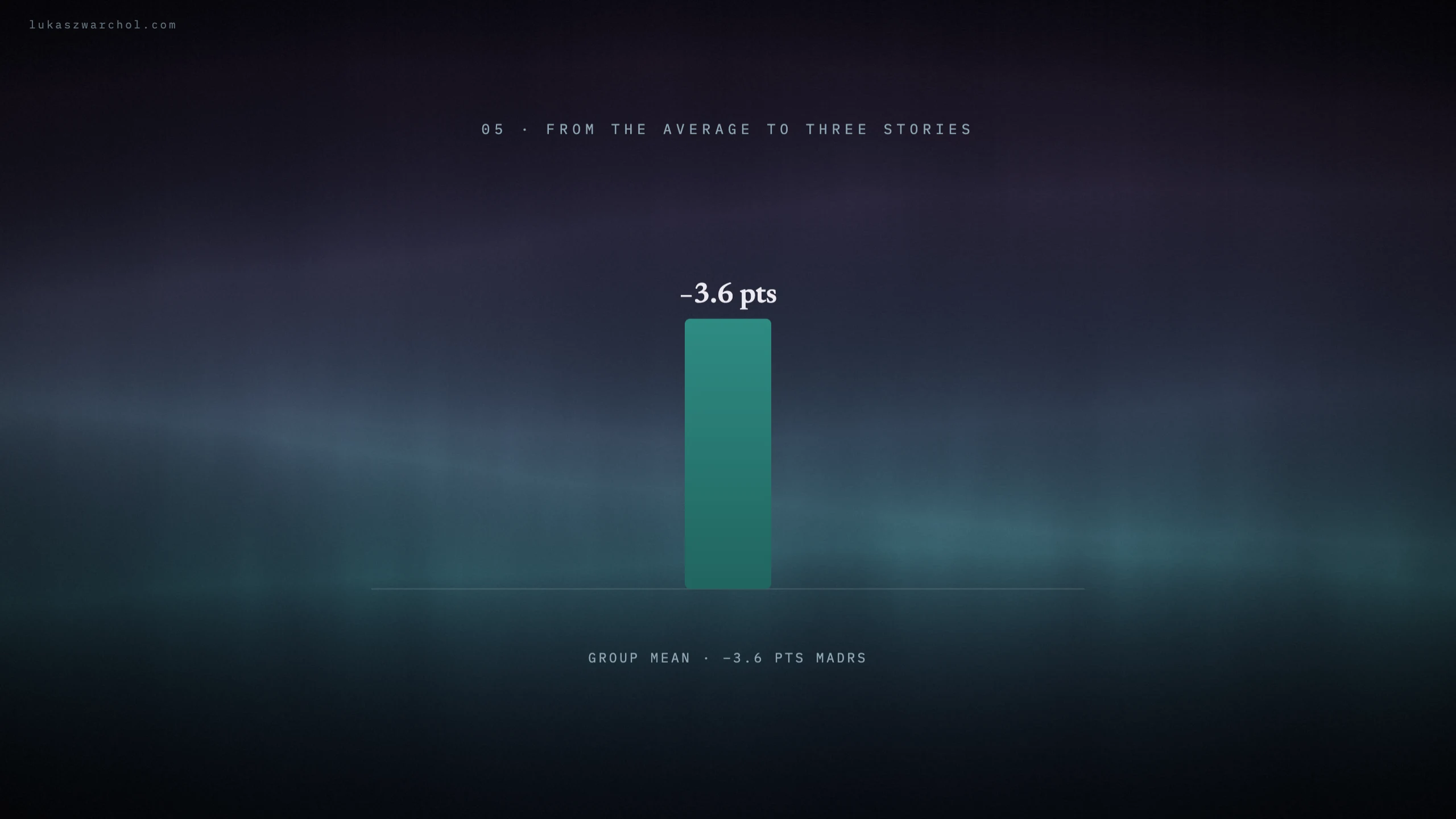
But a mean is not a single point. It is a cloud, and every dot in that cloud represents a particular person.

Let us zoom in on three dots lying next to one another. The same score: MADRS 32, indicating substantial symptom severity. Identical in all three cases. Behind it, however, lie three entirely different stories. These vignettes are clinical composites built from the characteristics of many people. Every case described in this text is presented in a way that prevents any individual from being identified.
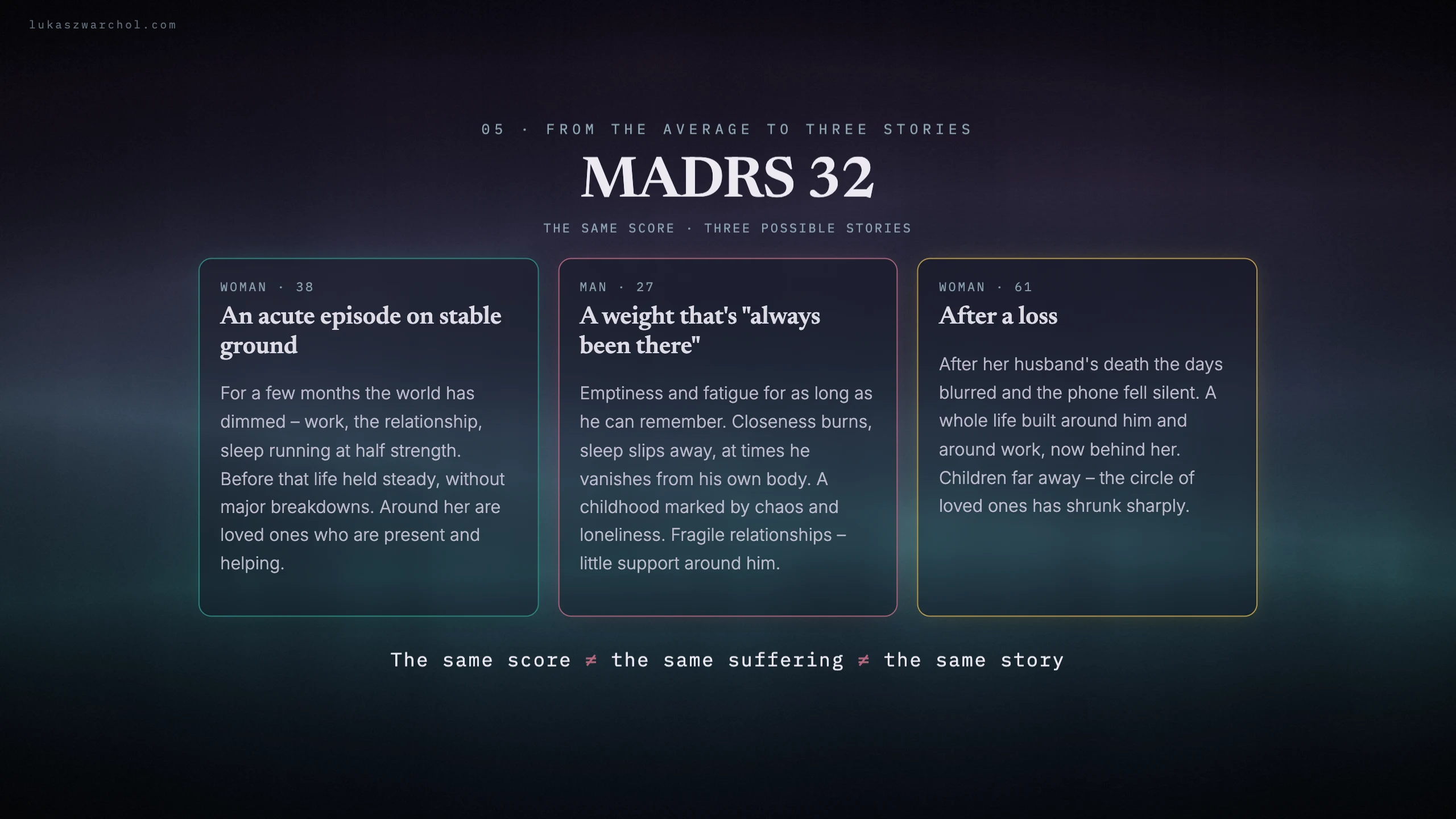
First. A 38-year-old woman. For several months, the world has grown dim. Work, her relationship and sleep are all running at half speed. Before this, she coped well. This is an acute episode on stable ground.
Second. A 27-year-old man. Emptiness and fatigue for as long as he can remember. Closeness burns; sleep slips away; at times, he feels himself disappear from his own body. Here, depression is the summit, not the whole mountain. Beneath it lies something far more complex.
Third. A 61-year-old woman. After her husband’s death, the days blurred and the phone fell silent. She says it is probably just old age. Sadness and loneliness. Does that already amount to an illness?
The same score. Not the same suffering. Not the same story. And here is the question I want to leave with you. Will each of these people need the same amount of preparation? The same number of sessions? The same support during and after the experience? Probably not. If that is so, then this is not the same treatment either, even though it looks identical on a graph of the group-level effect.
The galaxy of variables
Three stories—and yet there are far more than three variables. Behind that single score lies a whole galaxy of factors that abstracts barely mention: personality structure, identity integration, attachment patterns, affect regulation, readiness to confront difficult material, set and setting (mindset and environment), life history, trauma history, resources, support network and expectations.
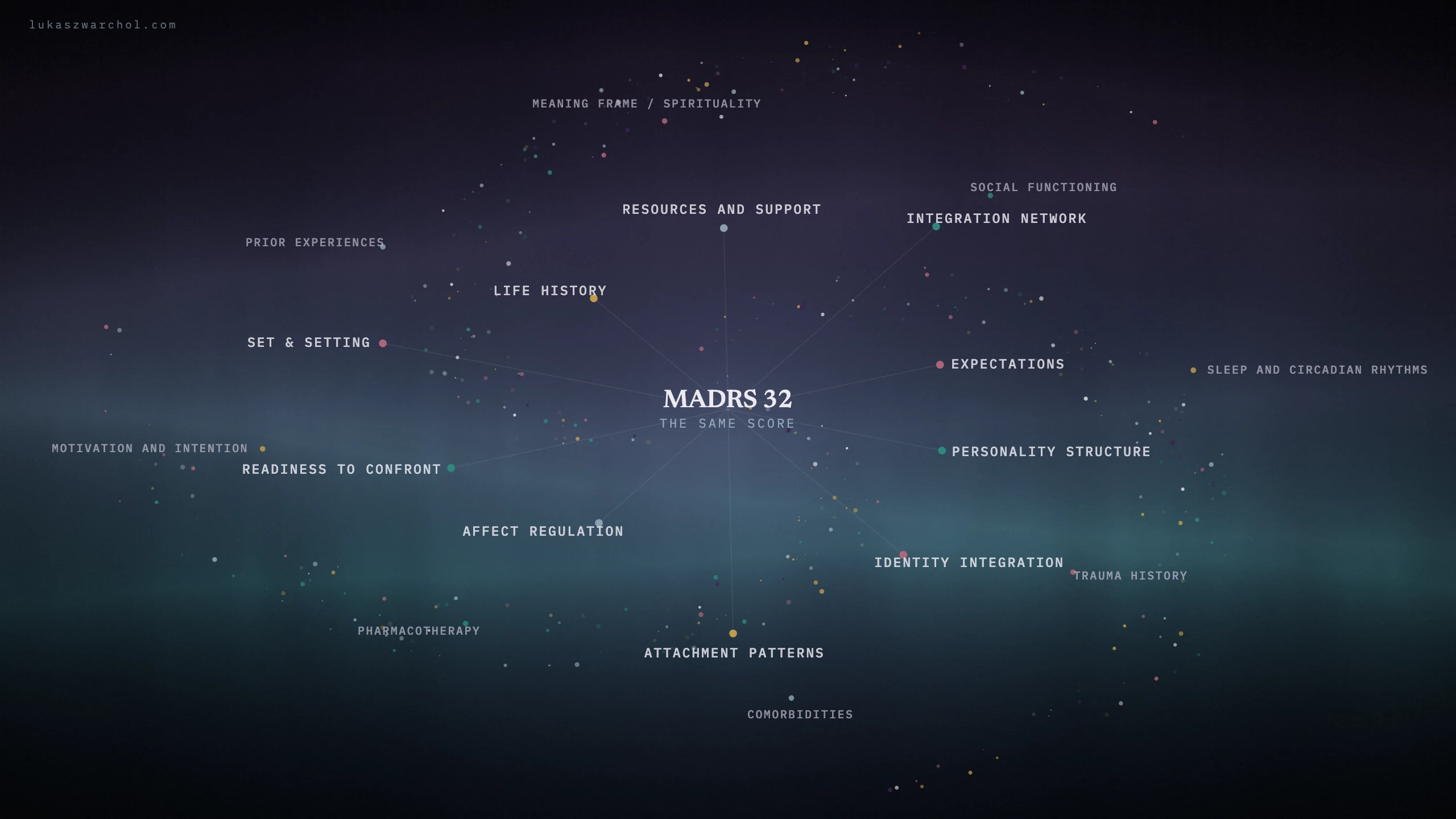
Each of these variables contains enormous variation. “Personality structure” is not a label. It is the organisation of our entire inner world, which can become destabilised during a psychedelic experience. This is why people with psychotic disorders are generally excluded from trials. At the same time, some Indigenous traditions in South America have long distinguished between states that may be approached ceremonially and those that may not. I mention this to show that making such distinctions is as old as the practices themselves, not as a recommendation.
Let me make this concrete, because this is where my own clinical experience lies. Preparing someone with a well-integrated personality structure and secure attachment is entirely different from preparing someone with borderline personality organisation and disorganised attachment. For the first person, the dissolution of ordinary ego boundaries during a session may be revealing and integrating, because there is something stable to return to. For the second, the same dissolution may be overwhelming. Without a stable core to return to afterwards, an experience intended to heal may instead destabilise. This does not necessarily mean “off limits”. It means “differently, more slowly, with different preparation and a different safety net”. This distinction is invisible in a single averaged bar. It appears only when we consider structure, not merely symptoms. Beneath all of this lies biology, which also varies from person to person.
Moreover, even the variables we do study do not explain everything. There are data linking a stronger mystical experience with greater improvement. But does this apply to everyone? Some people have a very intense experience and do not improve. What determines the difference? The dose? The number of administrations? Or perhaps something that is rarely addressed in psychiatric research and frequently addressed in psychotherapy: who the person having the experience is, and what happens to them afterwards.
The measurement window: we measure early, change happens later
There is one more dimension that changes the picture: time. We measure improvement at a specific moment, usually after three to six weeks. Symptoms may fall quickly enough to register within that window. But these are only the first weeks. Beyond the measurement window lie months and years that we usually do not examine.
Here, again, I draw on my own clinical experience. From the perspective of psychotherapy, especially work with personality structure, I know that symptomatic and structural change proceed at different speeds. A symptom may subside within weeks. Structure—how a person regulates emotions, builds relationships and maintains a coherent sense of self—changes over months and years. “Symptom” is itself an umbrella term. Sleep, anxiety, drive and mood may each change at a different rate. Collapsing them into a single score already loses a great deal.
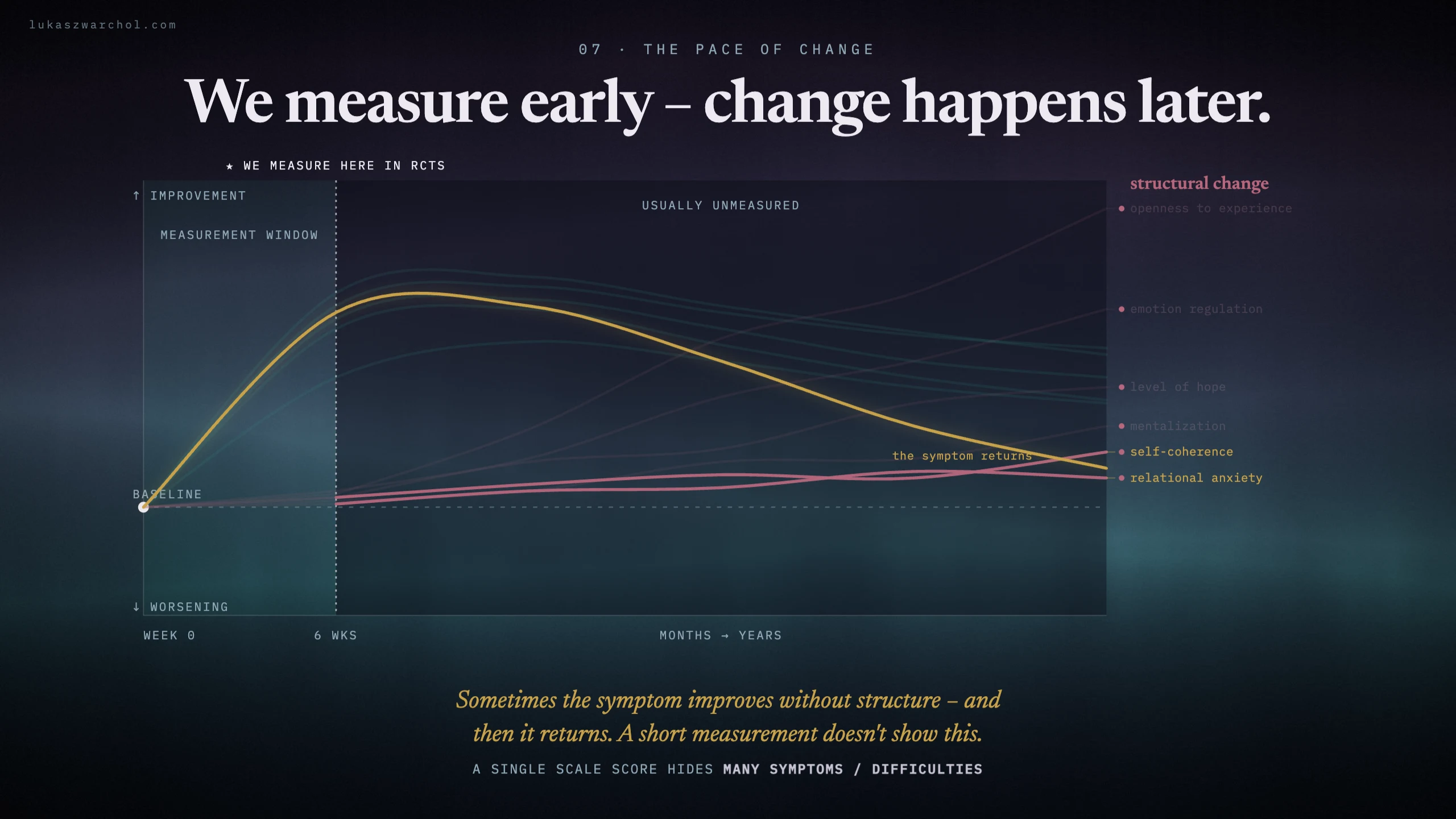
Some people improve symptomatically but not structurally; without that deeper change, the symptom returns. A short follow-up cannot capture this. It records a reduction at week 6 and marks it as a success.
A single, predetermined assessment point tells us nothing about the shape of the change that led to it. Methods exist that model trajectories of change rather than isolated time points. In 2018, together with Ludmiła Zając-Lamparska and Monika Deja, I published a paper on latent growth curve modelling (LGCM) in Polskie Forum Psychologiczne. At the time, I was not thinking about psychedelics at all; they entered my professional life two years later. Yet the question of time in longitudinal data has proved crucial for this field. These methods model the starting point and the rate of change separately and, most importantly, capture individual differences between trajectories. The question shifts from the size of the reduction to its dynamics and to the people whose course differs from the average. Individual participant data (IPD) meta-analyses would allow us to trace these curves at the level of individual participants rather than aggregated means. I discuss what this would change for one particular meta-analysis in the earlier post. This is the direction in which the field should move—and precisely where we can see whether our invisible variables are being captured or lost.
Four scenarios, one measurement
Let us arrange this into a simple matrix. On the horizontal axis is the reduction in symptoms within the study’s measurement window—the change the study can see. On the vertical axis is structural change—something the study knows nothing about.
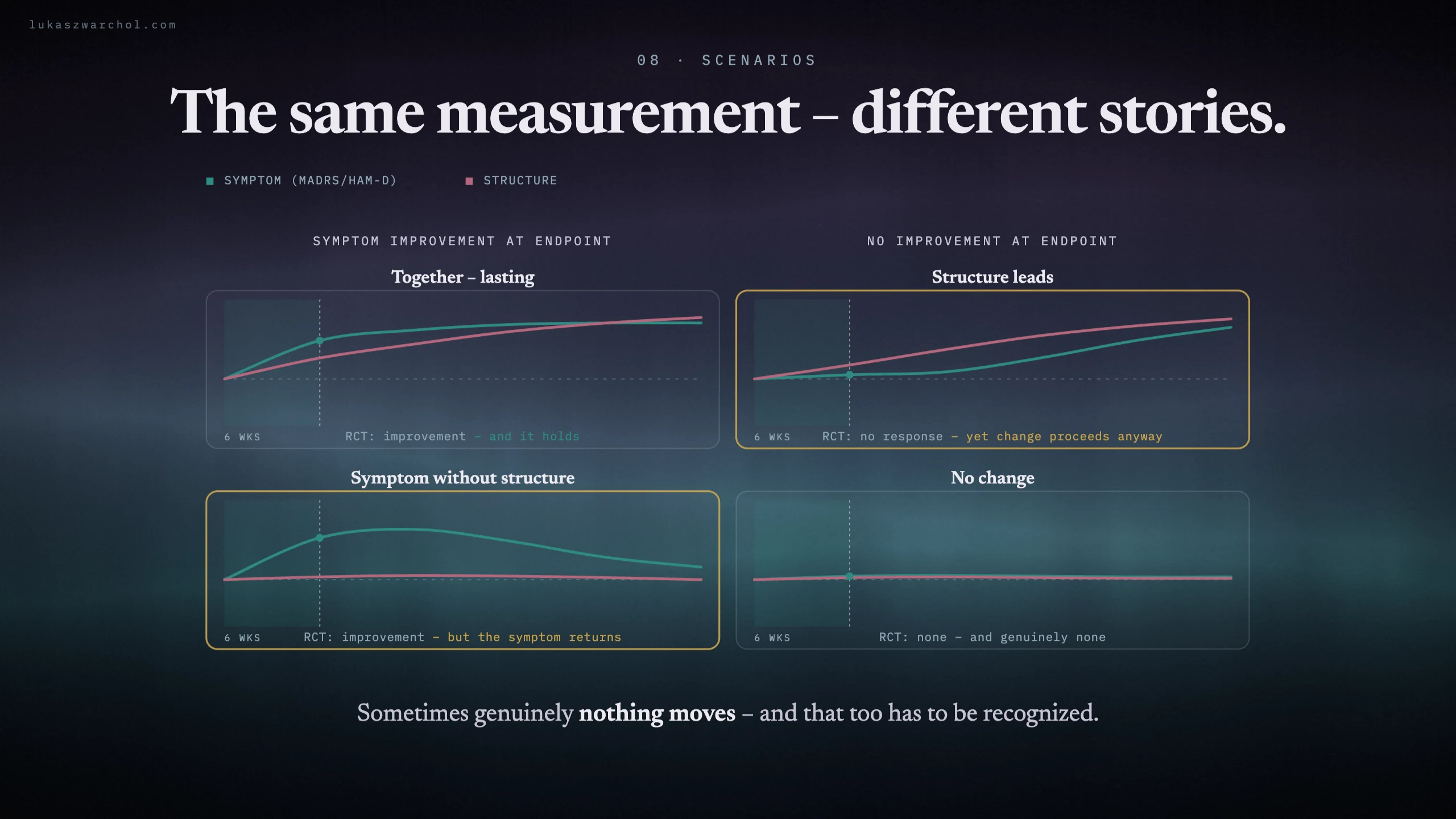
- A good start. Symptoms and structure begin to change together, and the change lasts. The study detects improvement, and it is right.
- The same result within the window, but without depth. Symptoms decline, but structure does not move. After the measurement window closes, the symptoms return. At the point of assessment, this story looks identical to the first, so the study cannot distinguish between them.
- The overlooked case. There is no improvement within the measurement window, so the study records “no response”. Beneath the surface, however, structural change has begun; something has opened, and symptom improvement follows only later. The study overlooks this person.
- No movement. Sometimes nothing truly changes. That, too, must be recognised.
A short follow-up is most likely to mislead precisely when symptoms and structure diverge. Sometimes it overstates change; sometimes it misses it. That is why it is worth examining structure alongside symptoms. If we can recognise which of these stories a particular patient is living—and recognise it early—we can adapt the preparation, pace and care to that person rather than to the average.
One person convinced me of this more than anyone else. After six weeks, she had not improved and, to be honest, felt worse. In the study assessment, she appeared to be a non-responder. I saw her again many months later and met someone profoundly changed. What mattered most was not the experience itself or those first six weeks, but what happened in the therapeutic work afterwards.
This isn’t just intuition—what we already know
At this point, the usual objection appears: “That is all very well, but it is soft.” It is not. Psychotherapy and clinical psychology already tell us quite a lot about who benefits, under what conditions, and when someone may become destabilised. Three strands of evidence are particularly relevant.
Benefit has a profile
In one study, 158 therapists working with psychedelics were asked which factors, in their view, made benefit most likely. The list was headed by the therapeutic alliance, social support, openness, the capacity to “surrender”—to let go of control—and secure attachment (Viljoen et al., 2026; see also Viljoen et al., 2025). This is a qualitative ranking, not a table of precise estimates, but its direction is telling. Dose is not at the top. Relationship, readiness and resources are.
Risk has a face
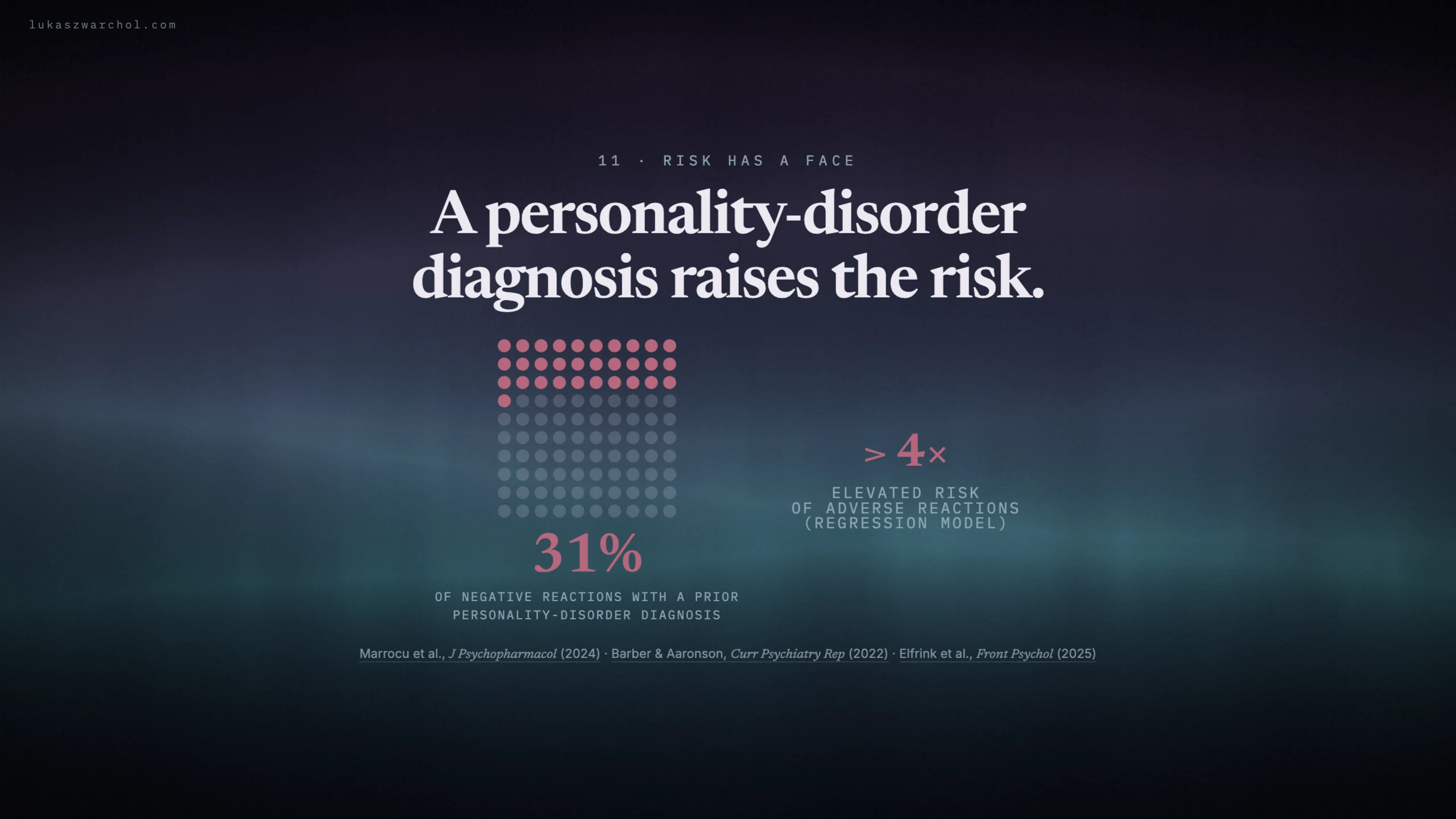
Risk, too, has a face—and concrete numbers. In one cohort, approximately 16% of participants reported an adverse response. Among people with a previous diagnosis of a personality disorder, the proportion was approximately 31%, and the model indicated a more than fourfold increase in risk (Marrocu et al., 2024). Behind these percentages are people with a less integrated sense of self and difficulties regulating emotion, for whom a psychedelic experience may be destabilising—sometimes to the point of what has been described as iatrogenic structural dissociation (Elfrink & Bergin, 2025). This is not an argument for fearmongering. It is an argument for screening and preparation—for learning to recognise these situations earlier.
The relationship is the matrix, not the background
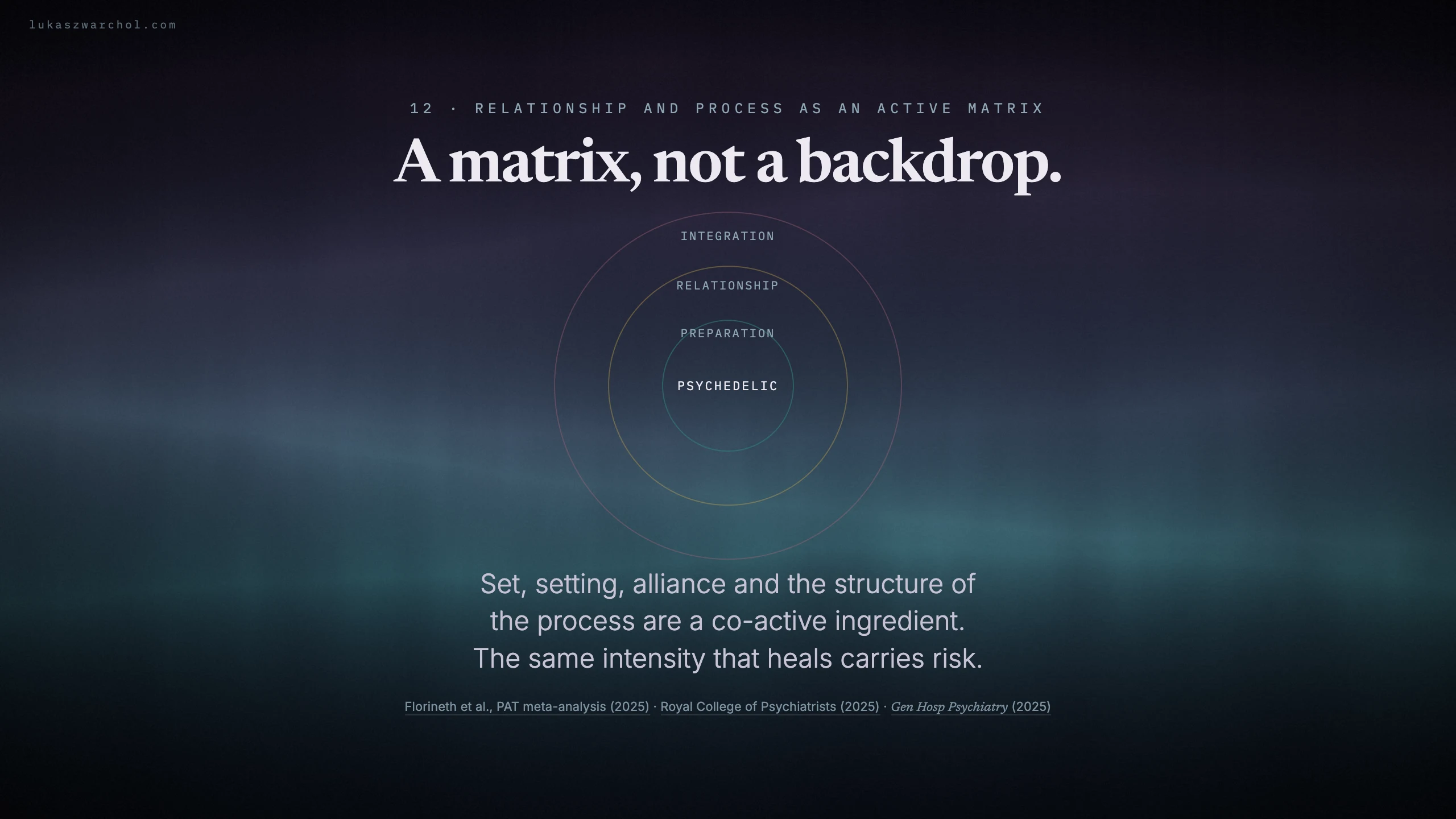
Screening, preparation and risk assessment all take place in contact with a particular therapist. Set, setting, alliance and the structure of the process are active components of the intervention. In an analysis of the amount of psychological therapy delivered, more preparatory therapy was associated with a greater reduction in symptoms (Florineth et al., 2026). One caveat is easy to forget: the same intensity that heals can also carry risk. The psychedelic peak therapy model operates in a context of heightened suggestibility. The relationship is therefore both a therapeutic factor and a source of safety.
“Psychedelic therapy” has become a catch-all
A separate issue is how we, as a field, speak about this work. The term “psychedelic therapy” has become a catch-all. Almost everything gets placed under this heading: TFP, IFS, ACT, somatic experiencing, mindfulness, holotropic breathwork, psychodynamic therapy, coaching, ceremony and “inner healing intelligence”. These approaches pull in very different directions. This is eclecticism, not integration.
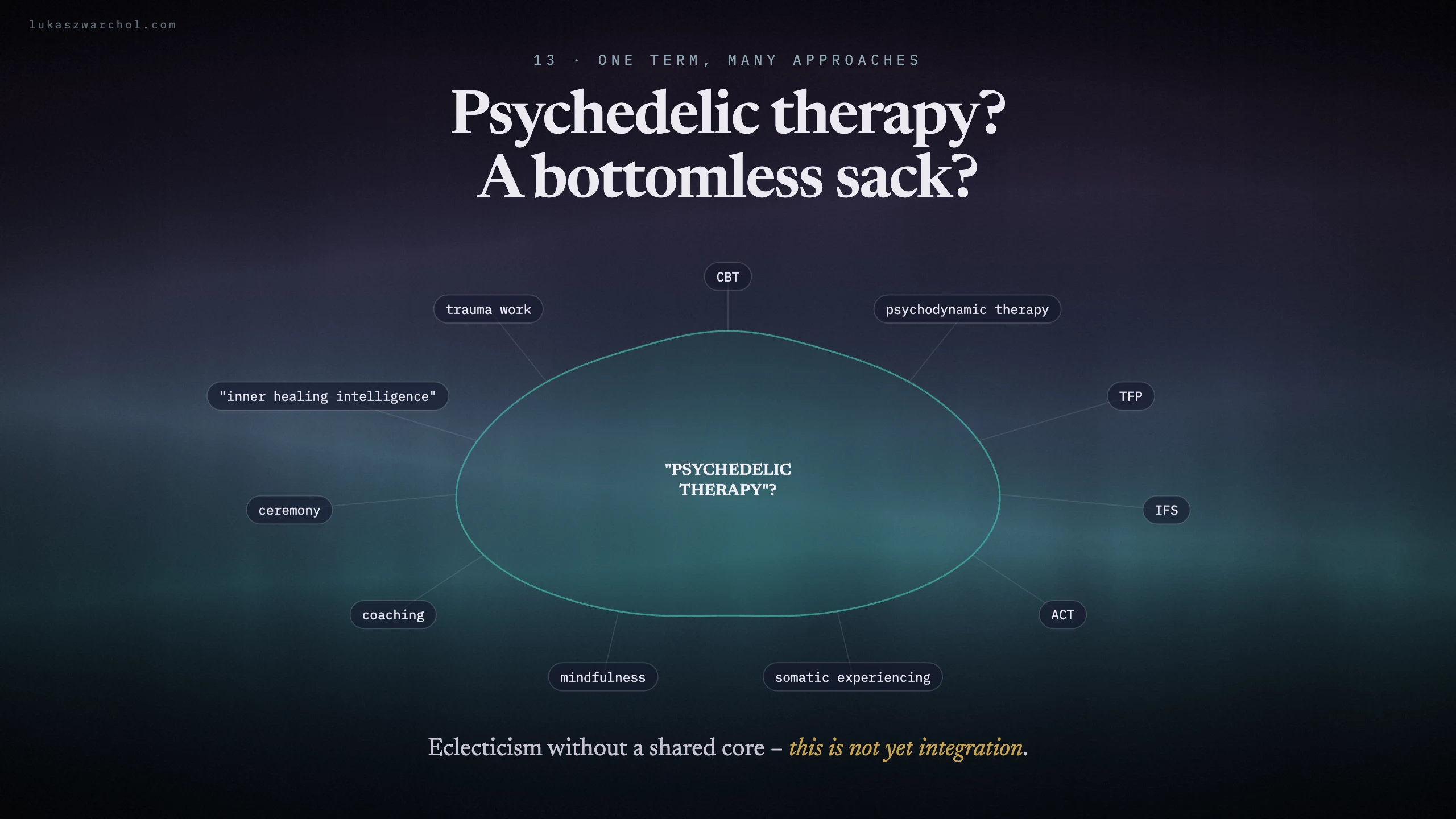
Placed on a continuum, they form a spectrum. At one end are presence, support, ceremony, harm reduction and integration. At the other are psychotherapies aimed at structural change: trauma-focused work, psychodynamic approaches and schema therapy. I do not have a ready answer. What is psychedelic therapy actually meant to be? Psychedelic-assisted psychotherapy? Or are integration and psychotherapy, provided alongside one another, enough? This plurality delights me as much as it unsettles me. It delights me because there is so much to draw from. It unsettles me because, without a conceptualisation—without an understanding of what we are doing—how do we know why one approach rather than another should be used? How do we train for this work? A weekend devoted to each method? Is that enough when we are treating people with mental health conditions?

This leads me to three things I want to say plainly.
- There is no single “psychedelic therapy”. Many very different practices sit under the same banner.
- Integration is not psychotherapy. Helping someone make sense of an experience after a session is different from conducting psychotherapy, yet the two are repeatedly confused.
- And the most important question: who decides whether someone needs psychotherapy or whether support is enough, and who is competent to make that judgement?
In my view, the real debate about competence has not even begun.
Not just another drug—a different paradigm
This is not just another drug treatment. It is a different way of providing treatment. And that is the heart of my unease. In the conventional drug model, we have a tablet, a repeatable dose, an effect that develops over weeks, a brief follow-up and a therapist at the periphery. In the psychedelic model, we have a single administration and six to eight hours of therapeutic presence, with preparation and integration at the core, alongside a team, set and setting, and the therapeutic relationship. The entire treatment is organised differently.
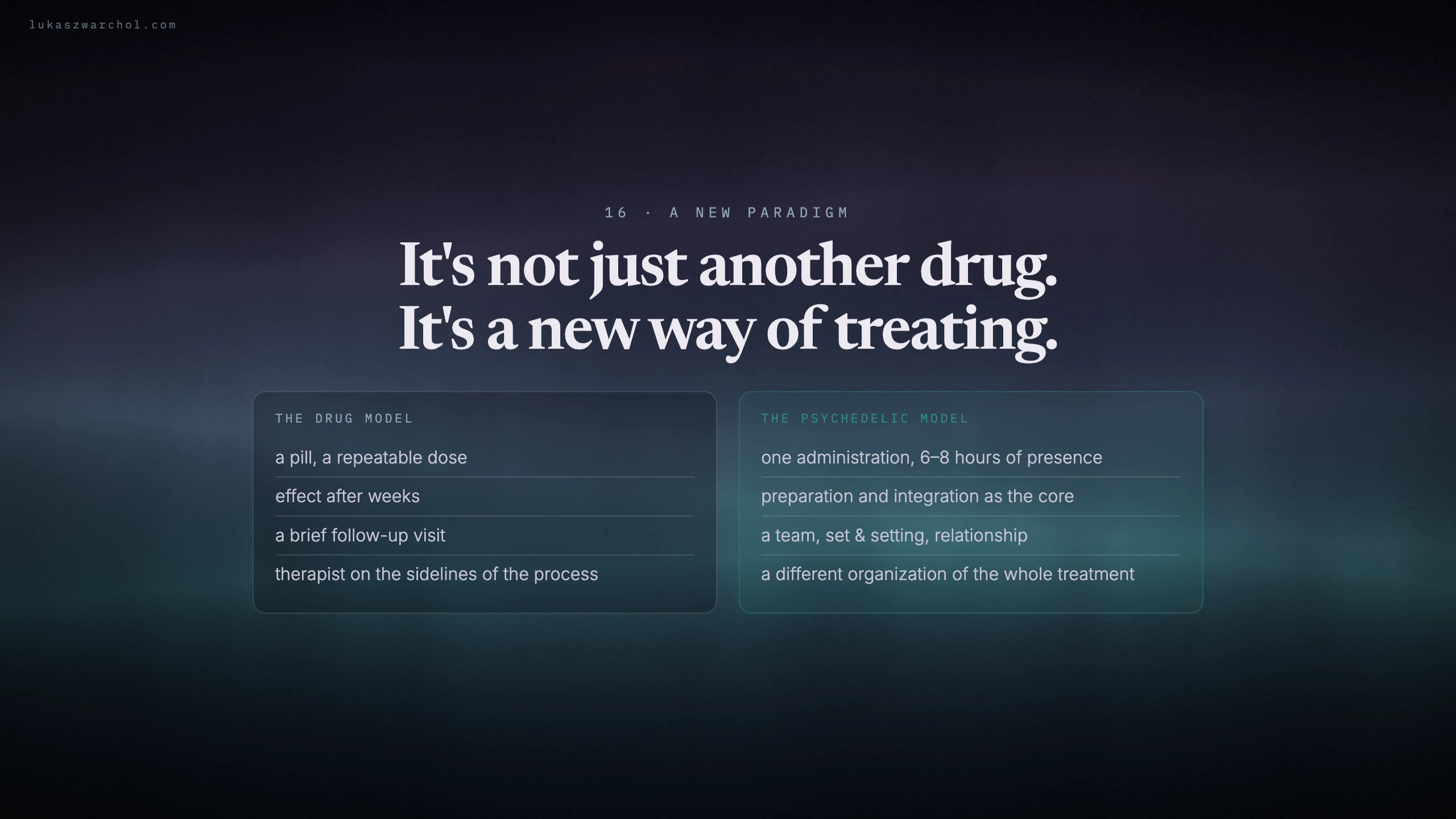
More precisely, as Muthukumaraswamy et al. (2025) argue, psychedelic therapy is a complex intervention in which the substance, psychotherapy, setting and the patient’s expectations are inseparably intertwined. The randomised-trial paradigm, by contrast, was designed to test the isolated effect of a substance: separate the drug from its context and see what the drug alone does. In psychedelic therapy, this separation is structurally impossible—not because researchers are incompetent, but because the object of study is indivisible. There is even a tool, PRECIS-2, that assesses where a trial lies on the continuum from explanatory or “laboratory-like” to pragmatic or “real-world”. Psychedelic trials tend to sit close to the explanatory pole: a dimly lit room, music, two therapists and a session lasting many hours. This bears little resemblance to how the treatment might look in an ordinary clinical setting. We therefore study it under conditions that may not be reproducible in routine practice, yet use those results to draw conclusions about routine practice.
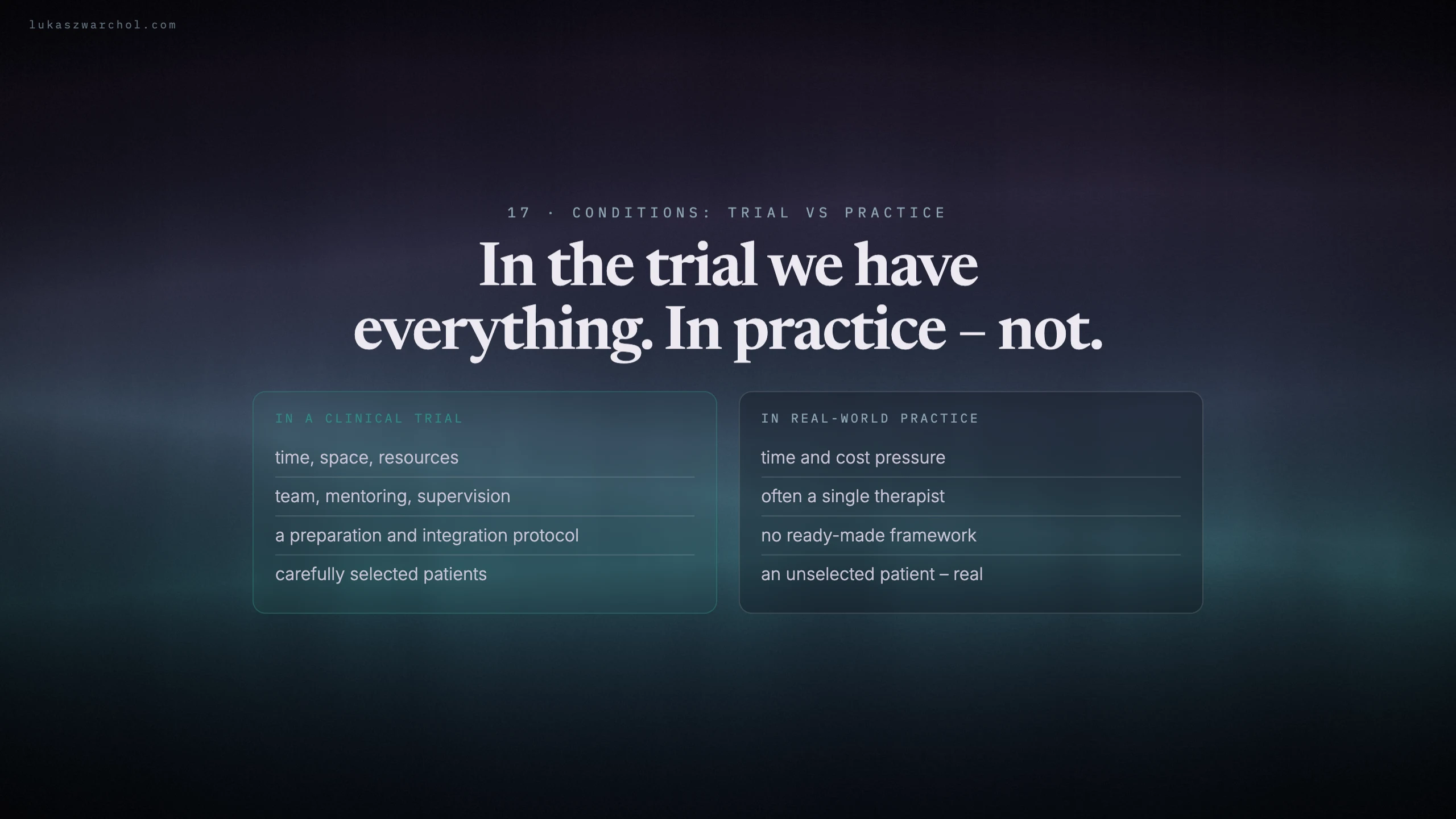
What most clearly separates a trial from the consulting room is the availability of resources. In a trial, we have time, a team, mentoring, supervision, a protocol for preparation and integration, and carefully selected participants. In the consulting room, we may have time pressure, one therapist, no established framework and patients selected according to clinical need rather than trial eligibility. These differences raise honest questions that must be answered before this work becomes widespread. Is this really what our training is preparing us for? How will we learn this practice? Will supervised clinical placements be mandatory? The responsibility is the same as in any other psychiatric or psychotherapeutic treatment, and we should not lose sight of it in our otherwise justified effort to respect cultural diversity and the roots of these practices.
There is one more risk that is rarely mentioned. When the substance reaches the market, pressure to reduce time and cost may remove precisely what is most expensive and most difficult: the relationship and the preparation. All that remains is administration. That would be therapy without therapy.
Eight hours
The first person I accompanied through a dosing session was a widow in her seventies. I was already a relatively experienced therapist and was receiving regular supervision. Even so, little in my previous experience could have prepared me for eight hours of being present with a person in her situation. It was entirely unlike anything I knew from the consulting room: a different register of closeness, a different responsibility, a different kind of silence.
This is precisely the clinical space I have been writing about throughout—the space that cannot be seen in an abstract or a graph of an average effect, and that cannot be made up for with a weekend course.
Let’s change the question
That is why I propose changing the question. “Do psychedelics work?” has become a worn-out refrain. The right questions are different: for whom? When? Under what conditions? Not “What is the average?”, but “What might be true for this one person sitting across from me?”
What we really need
At conferences, I often hear: “We need more studies to settle this.” I agree; we need many more. But we already know enough to say one thing: psychedelic treatments are worth developing for use in psychiatric care. So I will end with a call for more practitioners who can think about psychedelics in a clinical context, rather than simply a call for more studies.
And I will say this plainly. I am opposed to psychotherapists specialising exclusively in psychedelic work. To me, it is a little like improvisation: to improvise well, one must first be able to read music.
Rather than training a narrow group of “psychedelic therapists”, I would prefer to build a broader network of professionals able to prepare a patient over a longer period. A therapeutic alliance cannot be built—and openness and the capacity to “surrender” cannot be cultivated—in three or five meetings before a session. This is the work of months, closer to established psychotherapy than to a weekend course. I write elsewhere about what such a network lacks most—group formats—in Quo vadis, psychotherapy?.
Two caveats, to avoid misunderstanding. First, I am talking about clinical populations. Psychedelics may be used for different purposes. Coaching is one thing, a personal-development workshop another and psychotherapy something else again. But if we are talking about treating people with mental health conditions, we need nuance and the ability to recognise many variables, including those that are not obvious at first glance. Second, I am not trying to frighten anyone or strip these experiences of their beauty. I am calling for a mature conversation, because wider clinical use is approaching quickly, and the need for reflection is already real and will continue to grow.
So I return to the two pillars: data and stories. We still lack a way to integrate them. In the consulting room, I see how difficult this is; in abstracts, it appears simpler. The real challenge is to bring these perspectives together, not to choose between them. I do not have all the answers. But I believe this knowledge will emerge not only from research, but also from clinical practice—just as psychotherapy develops not only through science, but perhaps above all outside it. There are three foundations: alliance, preparation and an understanding of structure.
In closing—the galaxy returns
At the end, our central image returns: the galaxy of variables. It is the true background to every “score”. A number on a slide is not the end of the story; it is the beginning. If this text leaves you with one question rather than a ready-made answer—“for whom, when and under what conditions?”—then it has done its job.
If this subject interests you, I would be glad to continue the conversation in the comments, by email or at the next conference. We will build this knowledge together, or not at all.
References
Carhart-Harris, R. L., Giribaldi, B., Watts, R., et al. (2021). Trial of psilocybin versus escitalopram for depression. New England Journal of Medicine, 384(15), 1402–1411. https://doi.org/10.1056/NEJMoa2032994
Chmiel, J., & Rybakowski, F. (2026). Predictors of the effectiveness of psychedelics in treating depression: A scoping review. International Journal of Molecular Sciences, 27(5), 2202. https://doi.org/10.3390/ijms27052202
Compass Pathways. (2025, 2026). COMP005 and COMP006: Announcements of meeting the primary endpoint in phase 3 trials [press releases]. https://ir.compasspathways.com/
Elfrink, S., & Bergin, L. (2025). Psychedelic iatrogenic structural dissociation: An exploratory hypothesis on dissociative risks in psychedelic use. Frontiers in Psychology, 16, 1528253. https://doi.org/10.3389/fpsyg.2025.1528253
Erritzoe, D., Barba, T., Greenway, K. T., et al. (2024). Effect of psilocybin versus escitalopram on depression symptom severity in patients with moderate-to-severe major depressive disorder: Observational 6-month follow-up of a phase 2, double-blind, randomised, controlled trial. eClinicalMedicine, 76, 102799. https://doi.org/10.1016/j.eclinm.2024.102799
Florineth, G. A., Klima, I., Boeker, A. L., et al. (2026). Psychological therapy quantity and depressive symptom reduction in psychedelic-assisted therapy: A systematic review and meta-analysis. JAMA Network Open, 9(1), e2554843. https://doi.org/10.1001/jamanetworkopen.2025.54843
Goodwin, G. M., Aaronson, S. T., Alvarez, O., et al. (2022). Single-dose psilocybin for a treatment-resistant episode of major depression. New England Journal of Medicine, 387(18), 1637–1648. https://doi.org/10.1056/NEJMoa2206443
Kinahan, S., & Wilson, E. (2025). Perspectives of psychotherapists regarding psychedelic-assisted therapy. Counselling and Psychotherapy Research, 25(1), e12881. https://doi.org/10.1002/capr.12881
Marrocu, A., Kettner, H., Weiss, B., et al. (2024). Psychiatric risks for worsened mental health after psychedelic use. Journal of Psychopharmacology, 38(3), 225–235. https://doi.org/10.1177/02698811241232548
Moncrieff, J., & Kirsch, I. (2015). Empirically derived criteria cast doubt on the clinical significance of antidepressant-placebo differences. Contemporary Clinical Trials, 43, 60–62. https://doi.org/10.1016/j.cct.2015.05.005
Muthukumaraswamy, S. D., Baggott, M. J., Schenberg, E. E., et al. (2025). Psychedelic-assisted therapy as a complex intervention: Implications for clinical trial design. Therapeutic Advances in Psychopharmacology, 15, 20451253251381074. https://doi.org/10.1177/20451253251381074
Rosenbaum, J. F. (2024). Functional unblinding in pivotal studies and the future of psychedelic medicine. Journal of Clinical Psychiatry, 85(3), 24com15504. https://doi.org/10.4088/JCP.24com15504
Royal College of Psychiatrists. (2025). Psychotherapy assisted by psychedelic and related substances (PARS): Guidance for psychiatrists taking part in approved research trials. https://www.rcpsych.ac.uk/docs/default-source/improving-care/better-mh-policy/position-statements/pharmacologically-assisted-psychotherapy-research-guidance.pdf
Viljoen, G., Bendau, A., Walter, H., et al. (2026). Therapist-rated predictors of response to psychedelic-assisted therapy. Nature Mental Health, 4(6), 951–961. https://doi.org/10.1038/s44220-026-00642-4
Viljoen, G., Walter, H., Bendau, A., et al. (2025). Predictors of therapeutic response to psychedelic-assisted therapy: A systematic review. Journal of Psychopharmacology, 40(5), 703–719. https://doi.org/10.1177/02698811251389581
Zając-Lamparska, L., Warchoł, Ł., & Deja, M. (2018). Analiza danych podłużnych: Modelowanie latentnych krzywych rozwojowych [Longitudinal data analysis: Latent growth curve modeling]. Polskie Forum Psychologiczne, 23(2), 395–412. https://doi.org/10.14656/PFP20180210
Zamaria, J. A., Fernandes-Osterhold, G., Shedler, J., et al. (2025). Psychedelics assisting therapy, or therapy assisting psychedelics? The importance of psychotherapy in psychedelic-assisted therapy. Frontiers in Psychology, 16, 1505894. https://doi.org/10.3389/fpsyg.2025.1505894