Who I am and why I’m writing this
Psychologist · Neuropsychologist · Psychotherapist
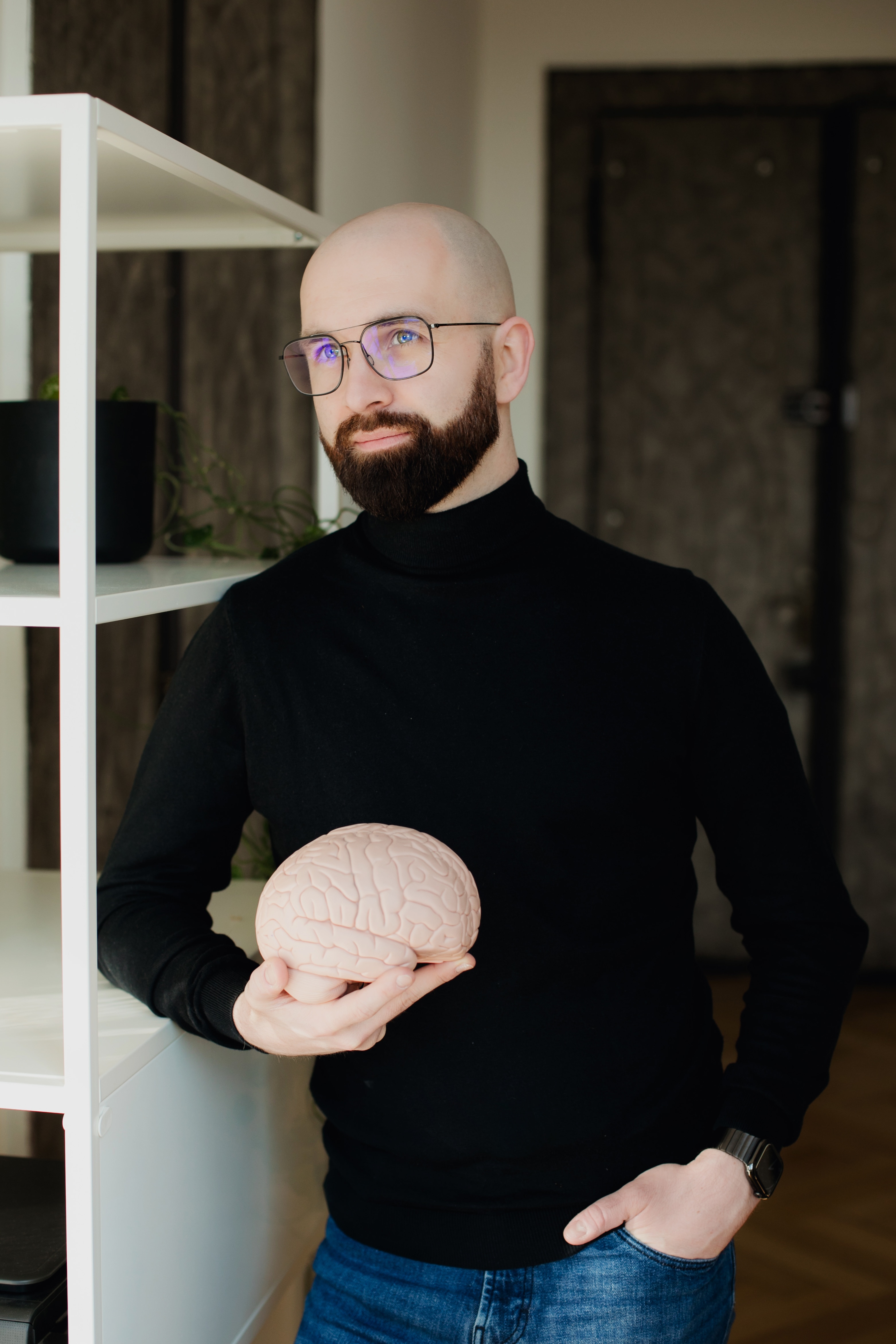
I’m a psychologist, neuropsychologist and psychodynamic psychotherapist. I’m also the co-founder and president of two centres in Bydgoszcz – Propsyche Centrum Medyczne and Promente Clinical Research Centre. I conduct psychological assessments for neurodevelopmental conditions in adolescents and adults, provide psychotherapy, and support the professional development of fellow psychologists and psychotherapists.
For the past few years, I have been training therapists in psychedelic-assisted therapy and working on international clinical trials involving psilocybin and other compounds.
I spend most of my days talking to people who come in with a question and expect a clear answer. “Do I have ADHD?” “Is this autism?” “What’s wrong with me?” I understand that need. Having a name for what you are experiencing can feel like solid ground. But I have learnt, sometimes the hard way, that rushing towards a label can mean missing what is actually going on. A behaviour is not a symptom. A symptom is not a diagnosis. And a diagnosis is not an explanation.
This is the tension at the heart of my work: between the pressure to work quickly and the responsibility to get things right; between what a study shows and why it produced that result. That second part – the why – is where most of the interesting questions hide. And most of the mistakes.
What I do
Psychological assessment and therapy in the consulting room are only part of my work.
Above all, I’m a psychologist. I could also describe myself as a psychotherapist, neuropsychologist or psychosexologist – each of those labels would be accurate. But psychologist is the first word. The rest fits inside it.
I’m the co-founder and president of two centres in Bydgoszcz: Propsyche Centrum Medyczne and Promente Clinical Research Centre. Together, they create a single environment in which clinical practice and science go hand in hand. There, I take part in international trials of new treatments for treatment-resistant depression, bipolar disorder and neurodegenerative diseases, including psychedelic-assisted therapy.
I train and support therapists entering the field of psychedelic-assisted therapy through my work with COMPASS Pathways, Fluence and Strata Mental Health. I also mentor early-career psychologists and work as a EuroPsy supervisor. In my spare time, I write code.
Why I write
I started writing publicly in Polish a few years ago, on my blog and on Facebook. I wrote mainly about ADHD, assessment methodology, psychedelic therapy and the things that bother me about how psychology is communicated online. I noticed something: the posts that resonated most were not the ones in which I had all the answers. They were the ones in which I was honest about what we do not yet know – where I said, “This is more complicated than it looks,” and then showed why.
This blog is a continuation of that way of thinking. A place where I can write more slowly and more deeply than social media allows.
What you’ll find here
I’ll write about psychological assessment and the difference between recognising a pattern and genuinely understanding it. About psychedelic-assisted therapy – what trials are showing and what the hype conceals. About neuropsychology and why the brain is not a simple input–output machine. About research methodology, because how a study is designed matters as much as what it finds. And sometimes about what it is like to sit in a room with someone and not yet know the answer.
If that sounds like your kind of reading, welcome.
Let’s begin.
Contact
Would you like to get in touch? Send me a message through the contact form or email me directly at kontakt@lukaszwarchol.com.
Experience and qualifications
For those who prefer the specifics, here is the full list of my education, training, certifications and qualifications.
Education and long-term training
- Master’s degree in psychology, clinical specialisation (five-year programme) – Kazimierz Wielki University in Bydgoszcz
- School of Psychodynamic Psychotherapy – Kraków Centre for Psychodynamics (four-year programme; accredited by the Polish Psychological Association and the Polish Society of Psychodynamic Psychotherapy)
- Training in psychedelic-assisted psychotherapy for therapists – COMPASS Pathways, London
- Transference-Focused Psychotherapy (TFP) – International School of Psychodynamic Psychotherapy, Poznań/Wrocław (in progress)
- Specialist training in clinical psychology – University of Gdańsk (four years)
- Postgraduate programme in Clinical Sexology: Assessment, Education and Therapy – Adam Mickiewicz University in Poznań (two years)
- Continuing professional development course in clinical sexology – Adam Mickiewicz University in Poznań
- Two-year programme in psychodynamic psychotherapy and sociotherapy for adolescents – Kraków Centre for Psychodynamics
- Course in sociotherapeutic support for children from families affected by alcohol-related problems – ETOH Foundation, Warsaw
- Polish–English School for Youth Trainers – Institute of Social Education, Wrocław
Selected short courses and training
- Integration of psychedelic experiences: theory and practice – LIMINAL, Warsaw
-
Sexology training accredited by the Polish Sexological Society and co-led by
Professor Zbigniew Lew-Starowicz – Centre of Postgraduate Medical Education, Warsaw:
- psychological and behavioural disorders related to sexual development and orientation
- treatment of sexual disorders
- sexual disorders in men
- sexual disorders in women
- Motivational interviewing: core methods – Academy of Thought and Emotion, Inowrocław
- Psychological support for LGBTQ people – Campaign Against Homophobia, Szczecin
- Social, legal and psychological aspects of transgender identity – Campaign Against Homophobia, Warsaw
- Risks associated with behavioural addictions: prevention, early intervention and recognising symptoms – “24 Hours” Foundation, Warsaw
- Preventive education on HIV/AIDS and drug dependence – ResHumanae Foundation / National AIDS Centre, Konstancin
- Helping a Person with Addiction – SET training company, Bydgoszcz
Certifications
- European Certificate in Psychology (EuroPsy), no. PL-062578-201911
- EFS & ESSM Certified Psycho-Sexologist (ECPS) – European Federation of Sexology and European Society for Sexual Medicine
Roles
- Co-founder and President of the Management Board – Propsyche Centrum Medyczne
- Co-founder and President of the Management Board – Promente Clinical Research Centre
- Consultant and mentor – COMPASS Pathways
- Trainer – Fluence
- Training faculty – Strata Mental Health
- Member of the National EuroPsy Awarding Committee in Poland
Memberships
- Polish Society of Psychodynamic Psychotherapy
- Polish Sexological Society
- Polish Psychological Association
- American Psychological Association (APA)