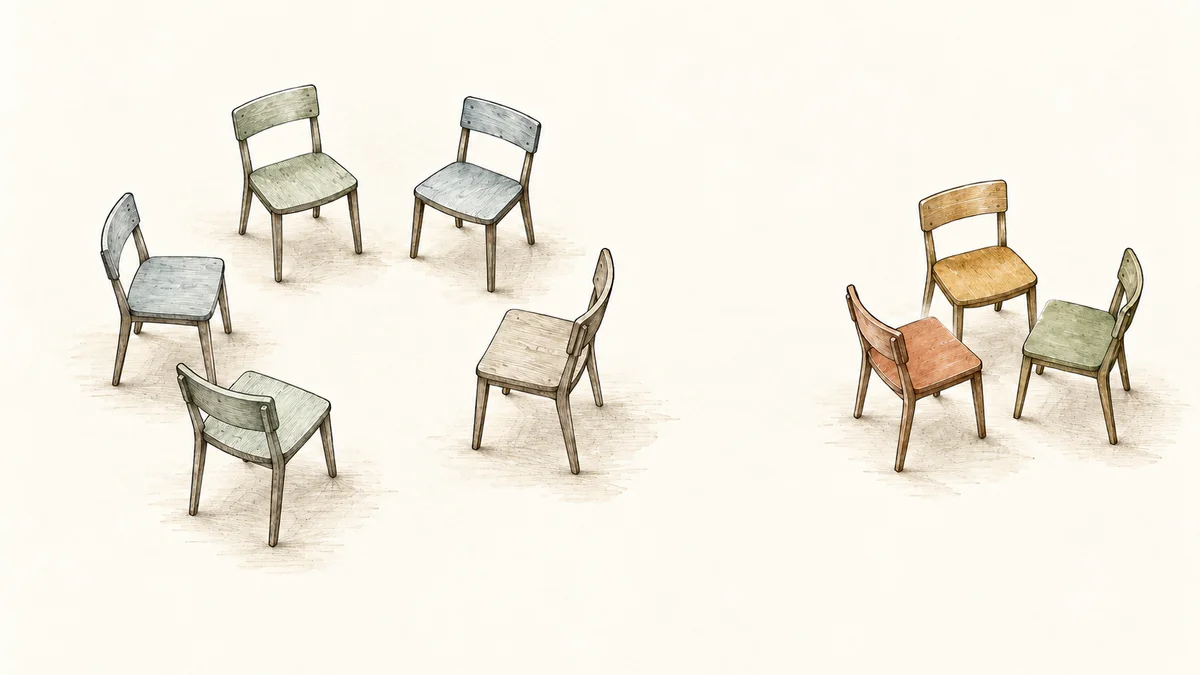
The ADHD-only diagnostician: why ADHD cannot be assessed in isolation
A new professional identity has emerged: the “ADHD diagnostician”. But diagnosis depends on differential assessment, and you can only distinguish ADHD from conditions you genuinely know from clinical practice. Imagine a psychiatrist whose entire practice consisted of diagnosing depression.

More and more often, I hear a sentence that would have made no sense a few years ago: “I am an ADHD diagnostician.” Not “a psychologist who assesses ADHD, among other things”, but an ADHD diagnostician. A profession, a specialism, a professional identity defined by a single diagnostic category. There are courses that award certificates in it. There are practices that do nothing else. There are price lists with a single item on them.
I understand how this came about. Waiting lists are long, the need is real, and many people went unrecognised for years and are finally being heard. I run courses in ADHD assessment myself and believe they are needed, so I have a stake in this market—and I want to acknowledge that before saying anything else. But precisely because I work within this market, I want to say something that runs counter to it.
You cannot be a diagnostician of a single diagnosis. Not because the role is too narrow or insufficiently ambitious, but because it is internally contradictory. Diagnosis is an exercise in differentiation, and you can only differentiate between conditions you genuinely know. Not merely conditions you have read about, but conditions you have seen and worked with.
Imagine a psychiatrist who diagnoses only depression
Let us conduct a thought experiment. Imagine a psychiatrist who diagnoses nothing but depression.
Someone comes in: their mood is rock bottom, nothing brings them pleasure, they wake at four in the morning, and they have lost six kilograms. Our hypothetical psychiatrist diagnoses depression. Are they right? Sometimes. But sometimes it is hypothyroidism. Or anaemia. Or a depressive episode in bipolar disorder, in which case antidepressant monotherapy can precipitate mania. Or sleep apnoea that has prevented someone from sleeping through the night for two years. Or the early stages of dementia in a 60-year-old. Or grief, which has every right to last. Or a personality organisation in which emptiness is an enduring state rather than an episode.
Notice one thing. This psychiatrist may be excellent when it comes to depression. They may know every meta-analysis, every treatment algorithm and every scale. Their problem is not that they know too little about depression. It is that they know too little about everything that is not depression. And that is precisely the knowledge that determines whether the diagnosis is accurate.
Does that sound absurd? In psychiatry, yes. No one awards certificates in “depression diagnosis”. No one would think to open a practice devoted exclusively to assessing depressive episodes. In ADHD assessment, we have done exactly that and decided it was normal.
The criterion no one talks about
In DSM-5, the ADHD criteria do not end with a list of symptoms. There are five sets of criteria, and the fifth—Criterion E—essentially says that the symptoms do not occur exclusively during the course of schizophrenia or another psychotic disorder and are not better explained by another mental disorder. Mood, anxiety, dissociative and personality disorders, as well as substance intoxication or withdrawal, are explicitly listed. ICD-11 includes an analogous requirement.
This is not a footnote. It has equal standing with the other criteria, and without it there is simply no diagnosis.
You assess Criterion A through an interview about symptoms; Criterion B by establishing their age of onset; Criterion C by checking whether they occur in at least two settings; and Criterion D by determining their effect on functioning. All of these concern the patient. Criterion E, however, tests the clinician. It depends on your own knowledge of what else can look exactly the same. No questionnaire can assess it for you, because you cannot ask a patient whether their symptoms might be better explained by something else.
In other words, the very definition of ADHD contains a compulsory reading list—and it is not a reading list about ADHD.
Nor is this merely my own standard. The European consensus statement on the diagnosis and treatment of adult ADHD, endorsed by 63 experts, treats the assessment of co-occurring conditions and differential diagnosis as part of standard diagnostic practice, not as optional diligence reserved for the particularly conscientious (Kooij et al., 2019).
What are we actually distinguishing ADHD from?
Let us look at what is on that list—not as a textbook catalogue, but as it appears in the consulting room.
- Mood disorders. Difficulty concentrating is a criterion for depression, not only for ADHD. Someone experiencing a depressive episode may tick the same box on every symptom scale as someone with ADHD.
- Bipolar disorder, particularly bipolar II disorder and cyclothymia. Increased drive, talkativeness, impulsive decisions and a reduced need for sleep—perhaps only four hours a night—can, when recounted retrospectively, sound like “I have always been this way”. An error in this direction is costly because it can lead to prescribing a stimulant for a state the stimulant will not help.
- Anxiety disorders. When worry consumes all of someone’s attention, none remains for anything else. From the outside, that can look indistinguishable from distractibility.
- PTSD and complex PTSD. Hyperarousal, vigilance, disrupted sleep and “drifting off”—the last of these may be dissociation rather than inattention. They can look identical yet respond very differently. In population data from a sample of children, the number of adverse childhood experiences was associated with both an ADHD diagnosis and its severity in a graded, dose–response relationship (Brown et al., 2017). That does not mean ADHD “is trauma”. It means the two occur together often enough that you cannot assess one without asking about the other.
- Personality disorders, particularly borderline personality organisation. Impulsivity, affect dysregulation, chaos in relationships and at work, and an unstable sense of self. The overlap is substantial enough to have generated reviews of its own, with the conclusion that differential diagnosis is difficult and that errors in either direction can lead to ineffective treatment (Weiner et al., 2019).
- Autism and co-occurring ADHD and autism (AuDHD). Sensory overload, exhaustion from masking and depleted executive functioning.
- Substance use, in both directions: as a cause of the clinical presentation and as an attempt to self-medicate difficulties that came first.
- Sleep disorders. Sleep apnoea, delayed sleep phase and chronic sleep deprivation. Someone who has slept five hours a night for five years will have cognitive deficits and does not need a psychiatric diagnosis to explain them.
- Physical health conditions. Thyroid dysfunction, anaemia, low ferritin, vitamin B12 deficiency, post-infectious symptoms and medication side effects.
- Cognitive functioning. Specific learning difficulties, below-average intellectual functioning and, in older people, early neurodegenerative change.
- And finally, the possibility mentioned least often: ordinary variation under unbearable conditions. Burnout, two children and a full-time job, caring for an ill parent, or spending 14 hours a day with a phone in your hand. Sometimes a person does not have ADHD. Sometimes they have a life that cannot be sustained in its current form.
Look at that list again and ask yourself one question. How many of these conditions and circumstances must you be able to recognise before you can say, “This is ADHD”? The answer is all of them. It is not enough to “know something about them”. You must be able to recognise them in the particular person sitting opposite you, who may not be saying any of it explicitly.
Chest pain
A second analogy: the first came from my own field, while this one makes the consequences of failed differential diagnosis even clearer.
Someone arrives at an emergency department with chest pain. It could be a myocardial infarction. It could be an aortic dissection, pulmonary embolism, pneumothorax, pericarditis, reflux or a panic attack. A doctor who knows only myocardial infarction will diagnose it in all seven cases. They will be wrong six times, and in the case of an aortic dissection the error could cost a life, because a treatment that helps in one condition can cause harm in the other.
No one would call that doctor a specialist. We would call them someone who should not be working in an emergency department.
A side note
Radiology has its own name for a related error: satisfaction of search. Once one abnormality has been found on an image, the likelihood of detecting further abnormalities falls. Not because they cannot be seen, but because the question has been closed.
¹ Berbaum et al. (1990) demonstrated the effect experimentally in Investigative Radiology, 25(2), 133–140 (DOI). Cognitive scientists later proposed the term subsequent search miss, precisely because “satisfaction of search” implies a mechanism—a satisfied observer stops looking—that the data do not support; see the review by Adamo et al. (2021) in Cognitive Research: Principles and Implications. I mention this as an aside, not as evidence. Applying an effect from image interpretation to diagnostic work in the consulting room is my analogy, not a finding of those studies.
What happens when someone genuinely conducts differential assessment
There is a study that should be required reading for anyone who assesses ADHD in adults.
Sibley et al. examined a group of participants from the MTA study whose ADHD symptoms appeared only after childhood—the classic presentation of “late-onset ADHD”. Instead of relying on screening alone, they applied a staged diagnostic procedure to data collected repeatedly between the ages of 10 and 25: reports from parents, teachers and the participants themselves; information about substance use and other disorders; and evidence about when and in what context each symptom occurred.
Around 95% of those with elevated symptoms were excluded from a late-onset ADHD diagnosis by that procedure. The most common reason was that the symptoms and impairment occurred exclusively in the context of heavy substance use. Other explanations included cognitive fluctuations without genuine functional impairment and presentations better explained by a co-occurring disorder. The authors state plainly that, without careful assessment, false-positive diagnoses are common (Sibley et al., 2018).
How did that study differ from a typical diagnostic appointment? Not through a better questionnaire. Not through a longer rating scale. Through differential assessment. The same people, the same symptoms and the same screening results—yet 19 out of 20 reached a different conclusion once someone properly examined Criterion E.
One caveat, to avoid overinterpreting the finding. This study concerns a specific group: people whose symptoms emerged after childhood. Its 95% figure must not be extrapolated to everyone presenting for assessment. But the direction of the finding is difficult to dispute. Differential assessment is not a formality that merely concludes the process. It changes the answer.
Who comes through your door—and why that matters
A practice that advertises itself as a place for ADHD assessment does not see a cross-section of the population. It sees people who already suspect they have ADHD, often after months of reading, watching and recognising themselves in other people’s accounts, and often with a completed rating scale on their phone. The prior probability in this group is very high.
It is also worth knowing what, exactly, they have been watching. In an analysis of the 100 most popular TikTok videos about ADHD, 52% were rated as misleading, and most of those videos were made by people outside healthcare (Yeung et al., 2022). I do not mention this to mock patients. People look for language with which to describe their own experience, and that is understandable. I mention it because it describes the material someone brings into the consulting room: a ready-made, often self-confirming hypothesis built on content, roughly half of which was misleading.
Two things converge here. The sample has been selected for one hypothesis, and the diagnostician has only one hypothesis available. In that arrangement, confirmation becomes almost inevitable—not because anyone is dishonest, but because there is no competing explanation against which the hypothesis can be tested.
Assessment tools will not rescue the process, because that is not what they are designed to do. The ASRS is a screening tool designed to avoid missing possible cases, which by definition means that it will over-detect. The DIVA is a structured interview. It brings order to the discussion of ADHD symptoms, their onset and their functional impact, but it cannot answer Criterion E. Neither instrument tells you where a symptom comes from.
This is not a criticism of any particular instrument; it is a property of the entire class. Harrison and Edwards systematically reviewed validation studies that reported the sensitivity and specificity of rating scales and screening interviews used with adults. The pattern is strikingly consistent: negative predictive values exceed 96%, whereas positive predictive values in clinical samples reach at most 61% and, in most studies, remain below 20% (Harrison & Edwards, 2023).
In plain language, these tools are excellent at ruling out and weak at ruling in. A negative screen is strong information: this is probably not ADHD. A positive screen is an invitation to do the work, not the result of that work. And that work—the work no rating scale can do—is precisely what the single-diagnosis diagnostician lacks the means to undertake.
The same problem is visible at the level of a single instrument. When adults with depression completed the ASRS, they endorsed each of its 18 items more often than healthy controls, and the number of items endorsed was associated with anxiety severity among those with depression (Dunlop et al., 2018). A scale cannot distinguish “I cannot concentrate because my brain has always worked this way” from “I cannot concentrate because I have lived in a state of high alert for three years”. Both people will tick the same box. Distinguishing between them is the clinician’s work, and no one else’s.
“But specialisation is a good thing”
This is the fairest objection to everything I am writing, so let me answer it directly. Yes, specialisation is a good thing. Medicine could not function without it, and no one would want to return to the doctor who does everything.
But two stages have to be kept distinct, because the entire argument turns on that distinction. In the treatment of ADHD, specialisation is entirely appropriate. Selecting and titrating medication, working on executive functioning, attention training, psychoeducation, and supporting a person who already knows what they are dealing with: here, narrow and deep expertise offers a genuine advantage. At the stage of establishing whether the presentation is ADHD at all, specialising exclusively in ADHD offers no such advantage. The question at this stage is not “How do I work with ADHD?” but “Is this ADHD—and if not, what is it?”
That reveals where the specialism actually lies. The specialism is not ADHD. It is clinical psychology or psychiatry, and differential assessment within those disciplines. It is the ability to hold several hypotheses at once, test them one by one, and discard the one the patient brought with them if it does not survive scrutiny. That takes years to learn and, by definition, cannot be a narrow competence.
Consider, too, what specialisation means in medicine. Cardiologists and neurologists specialise in systems. Even the narrowest example I can think of—a pain specialist—works with pain across many different conditions and has to understand them all. The narrower the specialism, the better—not the less well—you need to know the surrounding territory. A specialism is always a specialism within a field, and a field is defined by what borders it.
ADHD is not a field. It is one possible outcome of a diagnostic process. That is why “a specialist in one diagnosis” is inherently absurd, however well they know that one diagnosis. No one specialises in a single answer.
I once wrote something very similar in an entirely different context: psychedelic-assisted therapy, where I argued against anyone specialising exclusively in that work. I will repeat the same thought: to improvise well, you must first be able to read music.
Even when you are right, the assessment is not over
Let us assume that the diagnosis is accurate. This person really does have ADHD. Does the narrowness of the diagnostician’s competence cease to matter?
No.
ADHD rarely occurs alone. In a systematic review of 32 studies, mood, anxiety, substance use and personality disorders were clearly more prevalent in ADHD groups than in groups without ADHD, although estimates varied widely across studies depending on the population and the instruments used (Choi et al., 2022). Anyone assessing ADHD in adults will, in practice, work mainly with complex clinical presentations. That is the rule, not the exception.
A diagnostician who recognises only ADHD will find ADHD in such a presentation and stop. Formally, they may be right. Clinically, they may describe only a third of what is happening to that person—and, worse, present a third of the explanation as though it were the whole.
An accurate but incomplete diagnosis can cause more harm than one that is plainly wrong. The wrong diagnosis will eventually fall apart because nothing useful follows from it. The incomplete diagnosis can persist for years because, after all, it fits.
An attention problem is like a fever, not a diagnosis
Before discussing how this work should be organised, I want to say one thing about the symptom itself, because everything else follows from it.
Attention difficulties are so non-specific that, on their own, they point to almost nothing. Attention is the product of many interacting systems. It depends on mood, anxiety, sleep, thyroid function, substance use, arousal, motivation, whether a person feels safe or has to remain vigilant, and how many resources remain after an entire day spent regulating something else. Saying “they have attention difficulties” is about as informative as saying “they have a fever”: true, but almost useless until you know what is causing it.
That is why an ADHD assessment must include a formulation of personality and relational functioning. Not as a polite addition—“while we were at it, we also administered some personality tests”—but as a condition for interpreting the main symptom. How someone regulates affect, tolerates frustration and failure, maintains a sense of self, experiences closeness and conflict, and responds when another person lets them down is not merely background to ADHD. It is part of the answer to the question of whether this is ADHD. Without it, you have a thermometer and nothing more.
Why this should be a team process
If the field of differential diagnosis is as broad as the list above suggests, the honest conclusion is not that “ADHD diagnosticians should read more”. It is that one person’s competence cannot encompass all of it—and need not do so if the assessment is designed as a team process. A psychologist and a psychiatrist should contribute to the same assessment, rather than seeing the person at two separate appointments with no communication between them.
The psychiatrist brings the elements of differential diagnosis that a psychologist cannot resolve alone: bipolar disorder, psychotic states, physical health conditions, the effects of medication and substances, and risk assessment. The psychiatrist also makes and takes responsibility for treatment decisions—and response to treatment is itself a source of diagnostic information. They also bring a longitudinal view: what has happened to this person over time.
The psychologist brings what cannot be read from a single conversation: the assessment and interpretation of cognitive functioning, rather than merely administering a test; the assessment of personality structure; a developmental history reaching back to before the age of 10, based on school reports and accounts from parents rather than solely on the patient’s recollection of their younger self; functioning in relationships; and time—an interview lasting several hours, together with observation of the person in contact throughout those hours.
But the most interesting point is not that these areas of expertise complement one another. It is that they check one another. The psychiatrist sees the course of the difficulties and the response to treatment. The psychologist sees the person’s structure and how they function in a relationship. When those two pictures do not align, that is the most valuable information in the entire process, because that is precisely where an error may be hiding. Agreement is reassuring. Divergence teaches.
Let me make this concrete, because I have seen it more than once in both directions. Sometimes the presentation in a psychiatric appointment looks like textbook ADHD, and I would have interpreted it that way myself—until three hours of interviewing and testing reveal that the inattention is state-dependent, appears only during periods of affective instability, and leaves no trace before the age of 19. Sometimes the reverse happens: a psychologist interprets chaos as an expression of personality organisation, and the psychiatrist points out that the mother’s account of primary school is textbook ADHD, while what resembles a personality problem may reflect 30 years of living with an unrecognised disorder. Neither correction would have emerged from one person alone, because neither professional was looking in the wrong place. Each was looking through the lens of their own discipline.
Notice, too, that this partly addresses the problem described in the previous section. Two people who disagree create a form of feedback loop—the only one available immediately, without waiting two years to see what happens next. The European consensus calls for a comprehensive clinical and psychosocial assessment covering co-occurring conditions and functioning (Kooij et al., 2019). In practice, that means more than one pair of eyes and more than one area of expertise.
This shows why the “ADHD diagnostician” as a standalone profession is such a strange construction. It takes a process that requires two areas of expertise and compresses it into a single certificate.
I know the practical realities, so let me also say how this can be done when the full model is not possible. Waiting lists are long, there is no reimbursement, and in many places there is simply no one available for consultation. The minimum version does not require a team in one building or a shared consulting room. It requires a process that includes two perspectives: consultation, case discussion, and a habit of not finalising a report until someone from the other profession has reviewed it. And when that genuinely cannot be arranged, state explicitly in the report what you did not assess. A diagnosis with clearly marked limits is honest. A diagnosis that pretends to be complete is not.
Two people, two directions of the same error
Below are two vignettes. They are clinical composites, not descriptions of particular patients.
The first. A 34-year-old woman. Forgetfulness, procrastination, chaotic paperwork, and a sense that she does everything at the last minute. Before the appointment, she had obtained the maximum possible score on a screening scale. She received a diagnosis after one meeting and began treatment soon afterwards. She felt better for three weeks, then worse than at the outset—more anxious, sleeping less well. No one had asked whether, since the age of 19, she had experienced periods in which she “lost herself”; why every relationship ended in the same way; or whether what looked like distractibility was, in fact, an episode of dissociation. The diagnosis answered the question someone had asked, but not the problem she had actually brought into the room.
The second. A 41-year-old man. Fifteen years in the mental healthcare system with a diagnosis of a personality disorder. Chaos, frequent changes of job, decisions made in five minutes, conflict, and the sense that he was a “difficult patient”. In 15 years, no one had asked what he had been like at eight. No one had examined his school reports. No one had spoken to his mother. ADHD had been present all along—not instead of the other diagnosis, but alongside it.
These are not opposite problems. Overdiagnosis and underdiagnosis may look like positions held by two opposing camps, but they are the same error viewed from different sides: too little differential assessment. The same specialist who diagnoses ADHD in someone whose presentation is trauma-related may overlook ADHD in someone with a personality disorder diagnosis. It is one deficit, not two.
It is worth being honest about the evidence. The review by Kazda et al. found convincing evidence of ADHD overdiagnosis in children and adolescents, particularly in milder presentations, where the harms associated with a diagnosis may outweigh the benefits (Kazda et al., 2021). This paper does not question the existence of ADHD or the value of treating it, and that is not why I cite it. I cite it because it shows that the risk runs in both directions and that the threshold for diagnosis is not merely a technical matter.
What a course cannot make up for
Someone will say: fine, an ADHD diagnostician simply needs to read about all these other disorders—to read up on differential diagnosis and complete an additional training module.
That is not enough. Why?
You can read the criteria in 20 minutes. The criteria are the easiest part of this work. Recognition works differently. It depends on having an internal pattern of how a particular condition appears in a living person, and comparing what you see with that pattern. It does not come from reading. It comes from hours spent with people who live with that condition.
Reading about borderline personality organisation and spending a year sitting opposite someone with borderline personality organisation do not give you the same kind of knowledge. The first may enable you to pass an examination. The second means that, 40 minutes into an interview, something speaks up within you—still without a name or a justification, simply “this is not it”—and you ask a different question from the one you intended to ask. So much of diagnostic accuracy resides in that moment, not in the form.
So when I say that “you need experience of the conditions from which you are distinguishing ADHD”, I do not mean that you need to be well read. I mean that you need to have seen people with those conditions—preferably more than once.
The feedback loop that is missing
Therapeutic work contains an inbuilt corrective mechanism. You work with someone for two years, and reality keeps testing your hypotheses. What you assumed in the third session falls apart in the 30th, and you have to respond. You learn from your own mistakes because they return to you.
An assessment practice that reaches a diagnosis and issues a report has no such feedback loop. You see someone once or twice, write a document and never learn what happened next. If the diagnosis was accurate, you will not know. If it was inaccurate, you will not know that either.
The problem is not that people make mistakes. We all do; error is part of the profession. The problem is that a single-diagnosis diagnostician has no way to discover their own mistakes. Those mistakes do not return to them. They return to the next practice, sometimes years later, in the form of: “I was assessed, I have ADHD, and the medication is not working.”
What can we do about it?
I am not calling for people to stop assessing ADHD. I am proposing seven narrower, more practical measures.
- Work with an unselected population. If all your patients came seeking an ADHD assessment, find somewhere to work where people present with the full range of difficulties. Otherwise, you will never see what the distribution actually looks like.
- Do more than assessment alone. Provide therapy, even if only to a handful of people. Long-term contact is the only reliable teacher of how personality structure, trauma and bipolarity unfold over time.
- Build in a second perspective. If you do not work in a team, identify at least one person from the other profession whom you can call before issuing a report—and genuinely call them. Especially in the cases about which you feel most certain.
- Take the process, not merely the conclusion, to supervision. Above all, bring to supervision the cases in which the overall presentation does not add up, rather than those in which everything fits.
- Close the feedback loop. Ask six months later what happened. It is the only way for your mistakes to return to you rather than to someone else.
- Learn to say, “I do not know yet.” An assessment has every right to take longer than one appointment, and sometimes the appropriate conclusion is: “We will observe this and return to it in three months.” That, too, is an outcome of the work, not the absence of one.
- Learn to document a diagnosis you were not looking for. If your records from the past year contain no diagnosis outside a single category, that is not information about your patients. It is information about you.
Finally
I often repeat one sentence: a behaviour is not a symptom, a symptom is not a diagnosis, and a diagnosis is not an explanation. Today I will add a fourth. A diagnosis is not a specialism.
The person sitting opposite you did not arrive carrying ADHD. They arrived because their life was not working as it should, bringing with them a hypothesis they had heard somewhere. Your task is not to confirm that hypothesis. Your task is to test all the alternatives—and only then to accept or reject it.
That is the whole job. The rest is filling in a form.
References
Adamo, S. H., Gereke, B. J., Shomstein, S., & Schmidt, J. (2021). From “satisfaction of search” to “subsequent search misses”: A review of multiple-target search errors across radiology and cognitive science. Cognitive Research: Principles and Implications, 6, 59. https://doi.org/10.1186/s41235-021-00318-w
American Psychiatric Association. (2022). Diagnostic and statistical manual of mental disorders (5th ed., text rev.). American Psychiatric Association Publishing.
Berbaum, K. S., Franken, E. A., Dorfman, D. D., Rooholamini, S. A., Kathol, M. H., Barloon, T. J., Behlke, F. M., Sato, Y., Lu, C. H., & el-Khoury, G. Y. (1990). Satisfaction of search in diagnostic radiology. Investigative Radiology, 25(2), 133–140. https://doi.org/10.1097/00004424-199002000-00006
Brown, N. M., Brown, S. N., Briggs, R. D., Germán, M., Belamarich, P. F., & Oyeku, S. O. (2017). Associations between adverse childhood experiences and ADHD diagnosis and severity. Academic Pediatrics, 17(4), 349–355. https://doi.org/10.1016/j.acap.2016.08.013
Choi, W. S., Woo, Y. S., Wang, S. M., Lim, H. K., & Bahk, W. M. (2022). The prevalence of psychiatric comorbidities in adult ADHD compared with non-ADHD populations: A systematic literature review. PLOS ONE, 17(11), e0277175. https://doi.org/10.1371/journal.pone.0277175
Dunlop, B. W., Wu, R., & Helms, K. (2018). Performance of the Adult ADHD Self-Report Scale-v1.1 in adults with major depressive disorder. Behavioral Sciences, 8(4), 37. https://doi.org/10.3390/bs8040037
Harrison, A. G., & Edwards, M. J. (2023). The ability of self-report methods to accurately diagnose attention deficit hyperactivity disorder: A systematic review. Journal of Attention Disorders, 27(12), 1343–1359. https://doi.org/10.1177/10870547231177470
Kazda, L., Bell, K., Thomas, R., McGeechan, K., Sims, R., & Barratt, A. (2021). Overdiagnosis of attention-deficit/hyperactivity disorder in children and adolescents: A systematic scoping review. JAMA Network Open, 4(4), e215335. https://doi.org/10.1001/jamanetworkopen.2021.5335
Kooij, J. J. S., Bijlenga, D., Salerno, L., et al. (2019). Updated European consensus statement on diagnosis and treatment of adult ADHD. European Psychiatry, 56, 14–34. https://doi.org/10.1016/j.eurpsy.2018.11.001
Sibley, M. H., Rohde, L. A., Swanson, J. M., et al. (2018). Late-onset ADHD reconsidered with comprehensive repeated assessments between ages 10 and 25. American Journal of Psychiatry, 175(2), 140–149. https://doi.org/10.1176/appi.ajp.2017.17030298
Weiner, L., Perroud, N., & Weibel, S. (2019). Attention deficit hyperactivity disorder and borderline personality disorder in adults: A review of their links and risks. Neuropsychiatric Disease and Treatment, 15, 3115–3129. https://doi.org/10.2147/NDT.S192871
World Health Organization. (2019/2021). International classification of diseases for mortality and morbidity statistics (11th rev.). https://icd.who.int/
Yeung, A., Ng, E., & Abi-Jaoude, E. (2022). TikTok and attention-deficit/hyperactivity disorder: A cross-sectional study of social media content quality. The Canadian Journal of Psychiatry, 67(12), 899–906. https://doi.org/10.1177/07067437221082854